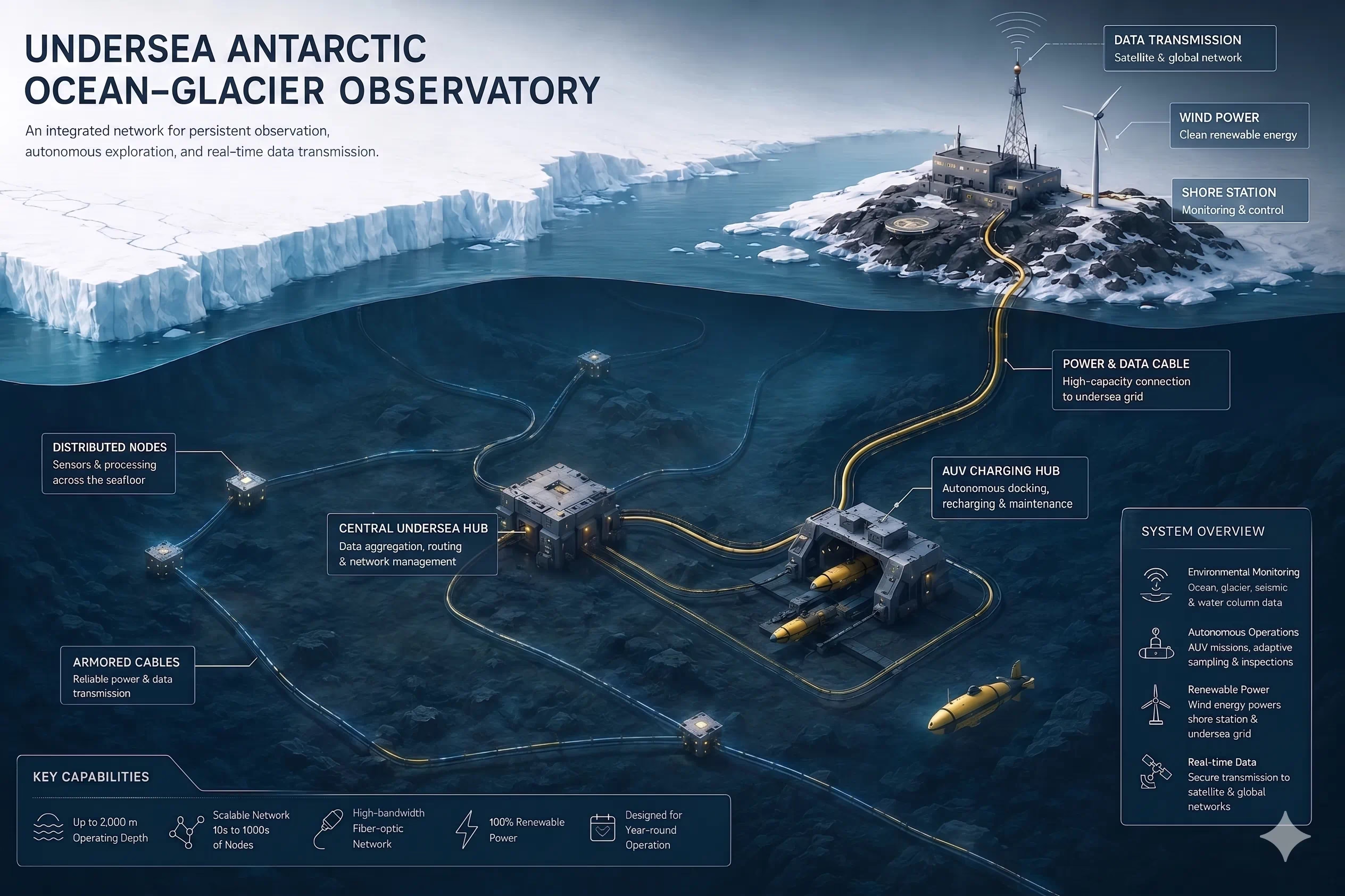
International Thwaites Station
— Undersea Antarctic Ocean-Glacier Observatory
The Undersea Antarctic Ocean-Glacier Observatory is a proposed system designed to
improve monitoring of ocean-glacier interactions in Antarctica. Current data collection
methods, including satellites, ice drilling, and ocean moorings, are limited by extreme
conditions such as freezing, shifting ice, sea ice, and iceberg damage, often resulting in
incomplete or lost data.
The proposed observatory introduces a permanent, cable-based infrastructure on the seafloor. A central hub would distribute renewable power through a network of cables and nodes, enabling continuous data transmission. Autonomous underwater vehicles equipped with sensors would collect data, dock at nodes, and transfer information wirelessly while recharging.
This system would allow year-round monitoring, reducing reliance on risky and time limited field operations. The data collected would improve forecasting models used to predict glacier behavior and sea level rise.
The observatory also supports evaluation of climate stabilization approaches, such as reducing warm water flow toward vulnerable glaciers. Continuous monitoring would be essential to assess the effectiveness of such interventions.
Overall, the observatory represents a significant advancement in polar research, enabling safer data collection, improved forecasting, and better-informed responses to climate change.
An underwater observatory, The International Thwaites Station, will be an international collaboration providing all nations relevant forecasts of sea level rise.